Several AV-110 radios in one fleet: coordinating operating positions and channels
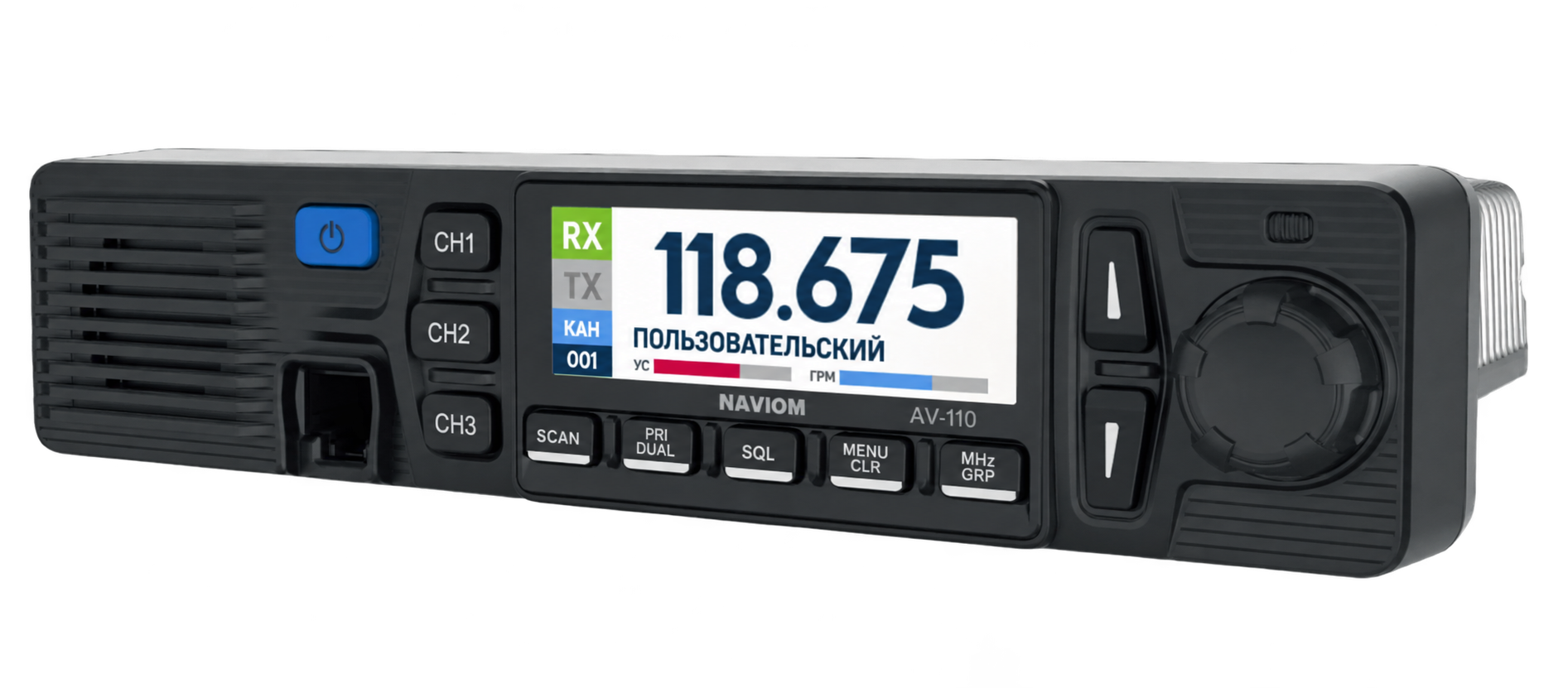
When radios are purchased for several positions, differences in configuration can matter more than differences in specifications. A button may select the primary channel in one vehicle and a supplementary channel in another, while group names differ. With 2,000 memory channels, GRP groups and three quick buttons, the NAVIOM AV-110 provides tools for organising a consistent layout. Plan that layout before installation.
A shared template starts with the task
Group the positions by actual use: ground vehicles monitoring the taxi frequency, a small-airfield operating position or another aviation task. Prepare a list of required channels and purposes for each group. The AV-110 covers 118.000–136.99166 MHz and supports 25 and 8.33 kHz spacing. A shared template should preserve those settings for every entry, while local differences should be recorded explicitly rather than introduced through accidental numbering changes.
Agree three familiar actions
Aim for a consistent sequence for selecting the main group, reaching a frequently used channel and returning to the normal working state. The three quick buttons can reduce repeated actions. A Russian-language interface and colour display allow a short guide to be matched to the screen. The short description does not specify how settings are transferred between units, so a consistent layout must not be presented as evidence of cloning or remote administration.
Identical radios do not mean identical installations
The AV-110 has nominal 12 and 24 V DC supplies with a maximum voltage of 31.5 V. For each position, check the available electrical system, control-panel position and antenna cable route. Nominal antenna impedance is 50 ohms and the socket is SO-239. Different vehicles may need different external speaker locations; the specified speaker load is 4 ohms. Keep these differences in individual installation records even when the working channels are identical.
Keep a short change record
After setup, record the channel-map version, change date, button assignments and any local differences. A shift handover can then check familiar actions and access to the main group rather than retesting all 2,000 memory slots. If one position’s task changes, update its description alongside the settings. This helps maintain fleet consistency without promising programming capabilities that are not established by the supplied technical sheet.
Questions and answers
Can all positions use the same group names?
Yes, a shared naming scheme is an organisational choice. Actual channels and local differences still need to match each position’s tasks.
Is automatic loading of a common profile confirmed?
No. The supplied sheet does not describe programming or profile-transfer procedures.
Availability,delivery time and package contents are confirmed with your enquiry.